Is grip strength testing only for older adults?
No. It is useful for athletes, fitness clients, people in weight loss phases, after a break or for long-term fitness tracking.
Grip strength measurement is a simple test that quickly shows the practical side of muscle strength. It is not only for athletes. It is also useful in active ageing, sarcopenia context, nutrition, rehabilitation and return-to-fitness tracking.
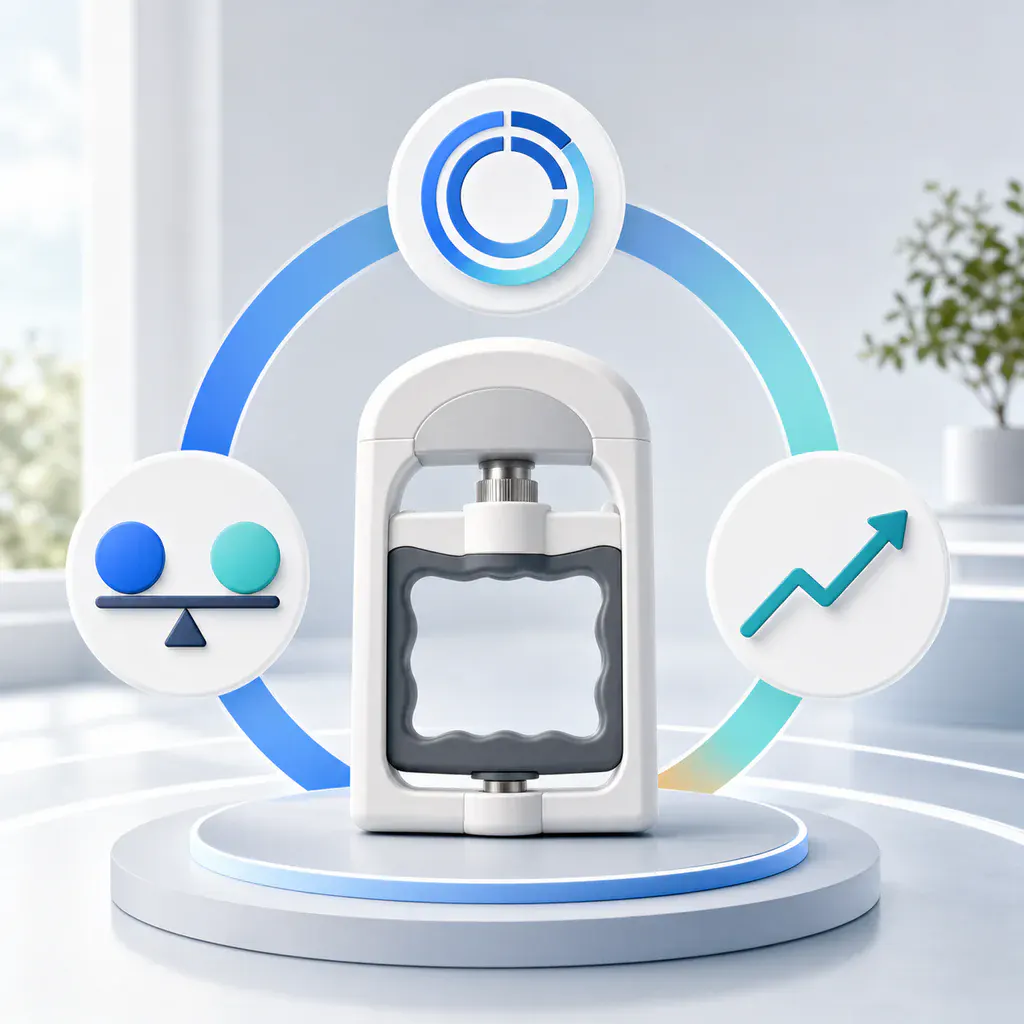
The device measures maximum hand squeezing force, usually in kilograms. The result is called hand grip strength, or HGS.
It is not a full-body strength test, but it is a quick and repeatable marker of muscle strength that is easy to track over time.
That is why it is often used as a practical screening value. It helps show whether functional strength looks lower, typical or improving over time.
Muscle mass and muscle strength are related, but they are not the same thing. Two people can have similar muscle mass and still produce different levels of force.
That is why the InBody plus InGrip combination is practical. InBody shows structure, while InGrip adds the functional strength view.
This matters in weight loss, after a training break, in active ageing and whenever you want to know whether a body-composition change also shows up in useful force output.
For the result to be comparable, the testing setup should stay as similar as possible. Elbow position, handle setting, dominant versus non-dominant hand and whether the person tests standing or seated can all affect the number.
It makes sense to test both hands, keep posture similar and avoid comparing a fatigued post-training result with a fresh one. A professional dynamometer also helps reduce technical noise by keeping grip setup more consistent.
One measurement gives you a baseline. The biggest value comes from repeat testing under similar conditions.
The trend shows whether strength is improving, flat or declining, which matters for training, weight loss and long-term follow-up.
If you track grip strength next to InBody, the result becomes more practical: you can compare muscle mass, distribution and functional output instead of relying on one isolated number.
Grip strength is affected by fatigue after training, hand or wrist pain, recent injury, hand dominance and how consistently the test is performed.
The number can also drop because of elbow or shoulder pain, irritated tendons, illness, poor recovery or simply a day when a safe maximal effort is not realistic.
That is why the value needs context instead of blind comparison across different conditions.
A lower grip-strength value can be a useful warning signal. In professional guidance, handgrip strength is used as part of screening for probable sarcopenia and wider functional decline.
That still does not make one lower value a diagnosis. The number needs to be read in the context of age, sex, body size, hand dominance, symptoms and ideally a trend over time.
If the value stays repeatedly low or drops clearly together with weakness, unintentional weight loss, mobility decline, pain or day-to-day functional problems, a qualified healthcare follow-up makes sense.
About the measurement
The main page about grip strength measurement and how InGrip complements InBody.
FAQ
No. It is useful for athletes, fitness clients, people in weight loss phases, after a break or for long-term fitness tracking.
It depends on the goal. Often after several weeks in training or after months in long-term tracking, ideally under similar conditions.
No. It is a screening value, not a standalone diagnosis. It makes sense only in context, together with age, functional status, symptoms and often with body-composition data such as InBody.
Often yes, but not always. Dominance, training history, pain, injury and work demands can all affect the difference. The trend and the wider context matter more than one left-right comparison.
Yes. Hand, wrist, elbow or shoulder pain, as well as fatigue after heavy training, can lower the value. That is why repeat tests should be compared under similar conditions.
Sources
HGS makes the most sense when it sits next to body composition and becomes a tracked trend for future visits. That is where the InGrip plus InBody combination turns one number into a more useful decision-making context.