Muscle is not only mass
Two people can have similar muscle mass but different strength. InGrip adds the question of function to the question of quantity.
InBody InGrip
Included in Premium measurementInBody InGrip measures hand grip strength in kilograms and in Prague it makes the most sense as an add-on to InBody 970 body composition testing. InBody shows muscle mass and distribution, while InGrip shows how much force you can actually produce. That combination matters for sarcopenia context, active ageing, fitness progress and long-term tracking.
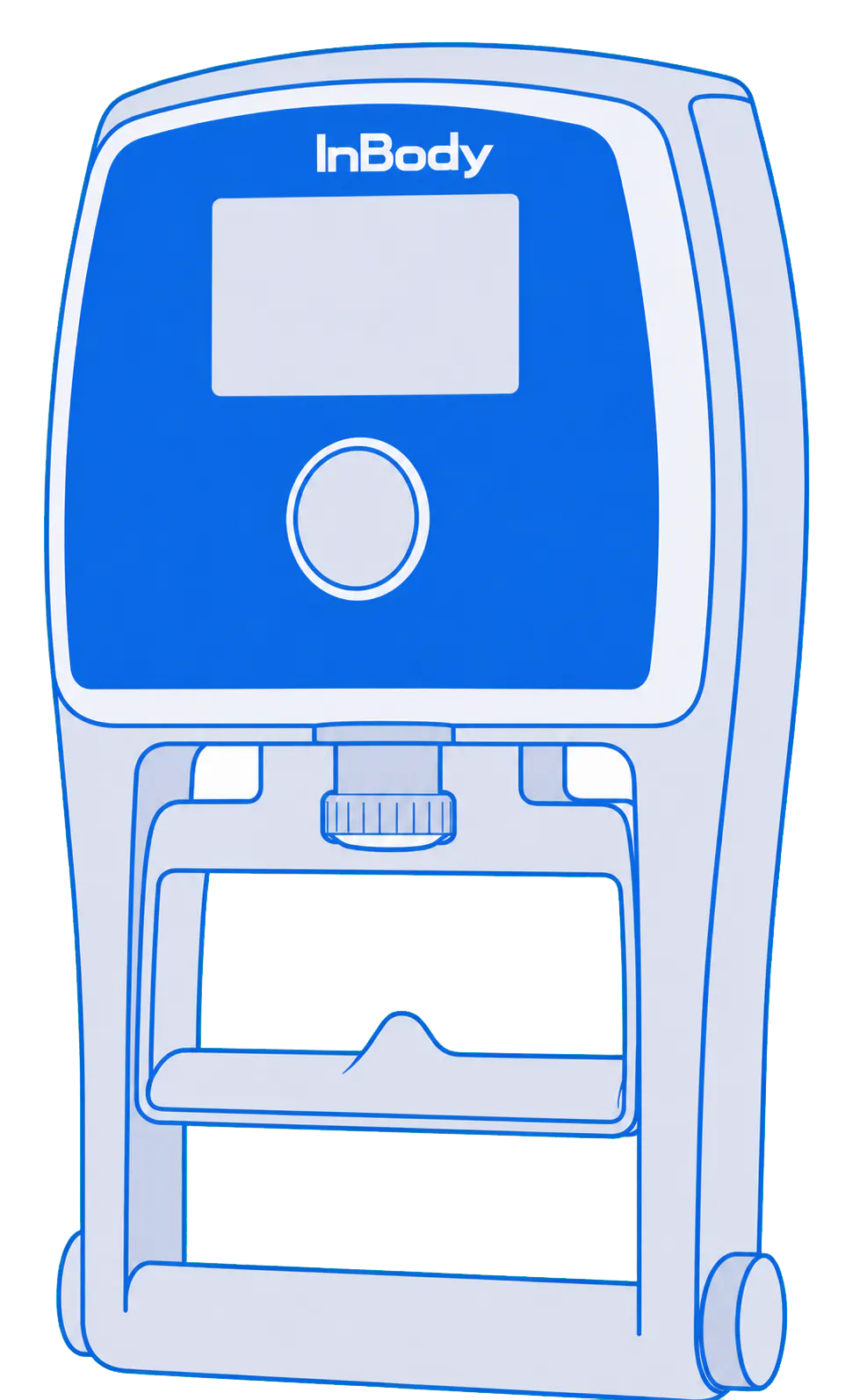
hand grip strength
measurement range listed by InBody.cz
result display unit
Biomarker
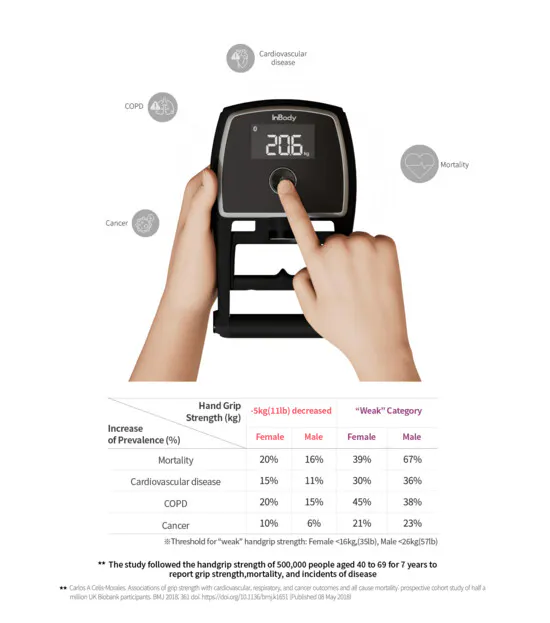
Grip strength is a fast and practical marker of muscle strength. In professional sources it is used as a screening value linked with functional capacity, health risk and sarcopenia algorithms. It is not a diagnosis by itself, but it is a useful signal to track over time.
Two people can have similar muscle mass but different strength. InGrip adds the question of function to the question of quantity.
InBody materials and research literature treat grip strength as an accessible muscle-strength marker. The test is quick, non-invasive and repeatable when the method is consistent.
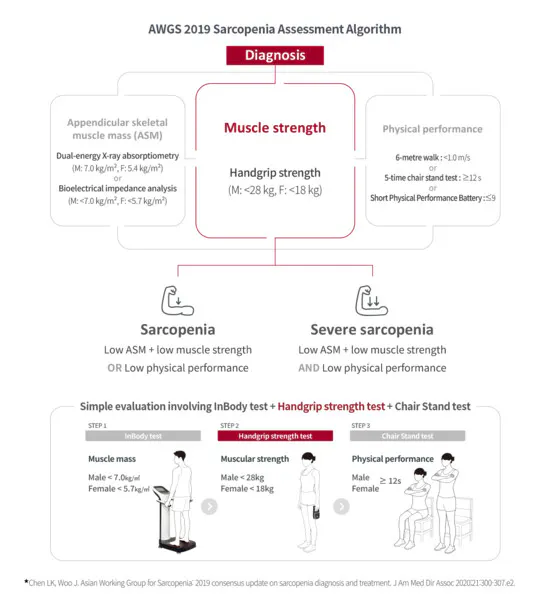
Current sarcopenia assessment is not only about muscle loss. Muscle strength and physical performance are part of the picture, and hand grip strength is one of the common strength inputs.
One result is a baseline. Repeated testing under similar conditions helps show whether strength is stable, improving or dropping.
InBody + InGrip
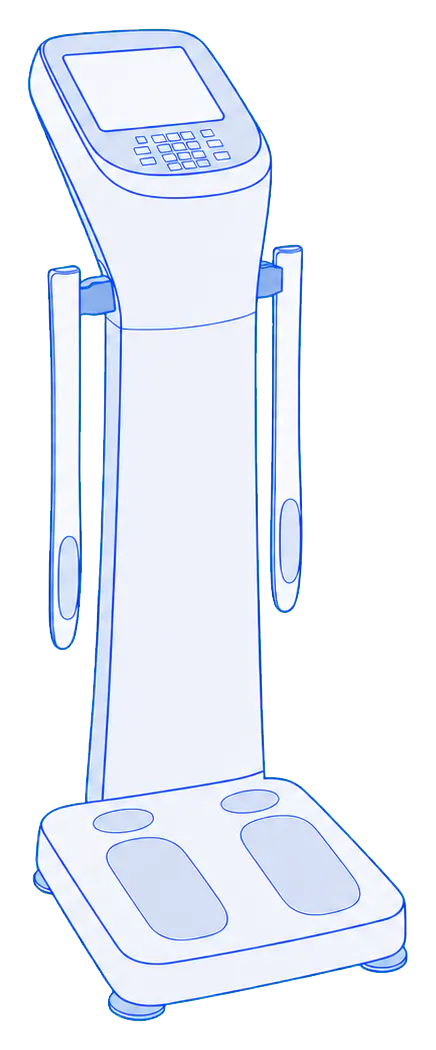
InBody gives a detailed view of body composition, segmental muscle, water, fat and related values. InGrip adds hand grip strength, making the output more practical: structure and function together.
InBody shows muscle mass and distribution. InGrip measures HGS. Together they help separate a mass issue, a strength issue or a combination of both.
EWGSOP2 emphasizes low muscle strength as a key sign of probable sarcopenia, followed by muscle quantity or quality and physical performance.
Grip strength is an easy number to explain and track. It supports conversations about strength training, recovery, nutrition and long-term fitness.
InGrip uses Bluetooth communication and is designed to work with InBody 970/970S and selected professional InBody systems.
Create your account in advance and keep the measurement alongside your InBody history so the first and next Prague visits make equal sense.
Process
The test is short, but the method matters. The goal is not just to squeeze a device, but to test consistently so the result remains comparable over time.
The handle is adjusted to fit the hand, avoiding a grip that is too open or too tight.
The manufacturer lists left and right arm diagnosis, making side-to-side comparison possible.
The client produces a maximum safe squeeze for a few seconds. The device displays the result in kilograms.
The number is interpreted with sex, age, dominant hand, pain, injury, fatigue, training and body composition in mind.
Result
Grip strength should be treated as a screening and trend value. A low value does not diagnose anything by itself, but it is a reason to look more closely at muscle mass, nutrition, training, performance and health context.
The primary output is grip strength in kg. InBody lists a 1-100 kg range, +/- 0.5 kg error and 0.1 kg display unit.
Professional sources work with indicative cutoffs for low grip strength, and they differ by sex, age and methodology. Interpreting a specific value belongs to a doctor or specialist; we show you the measured result and how it develops over time.
A large difference between left and right may reflect dominance, training, pain, injury or other clinical context.
For practice, the trend is often most useful. A falling strength value deserves attention, especially alongside changes in muscle mass.
Technology
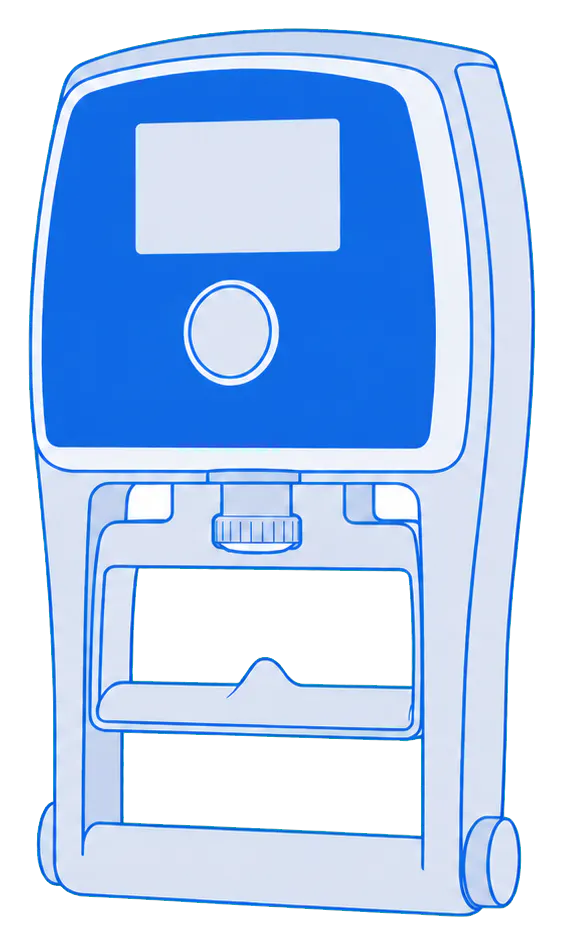
InGrip is a professional hand grip dynamometer built for repeatable testing, InBody integration and fewer errors caused by inconsistent grip position.
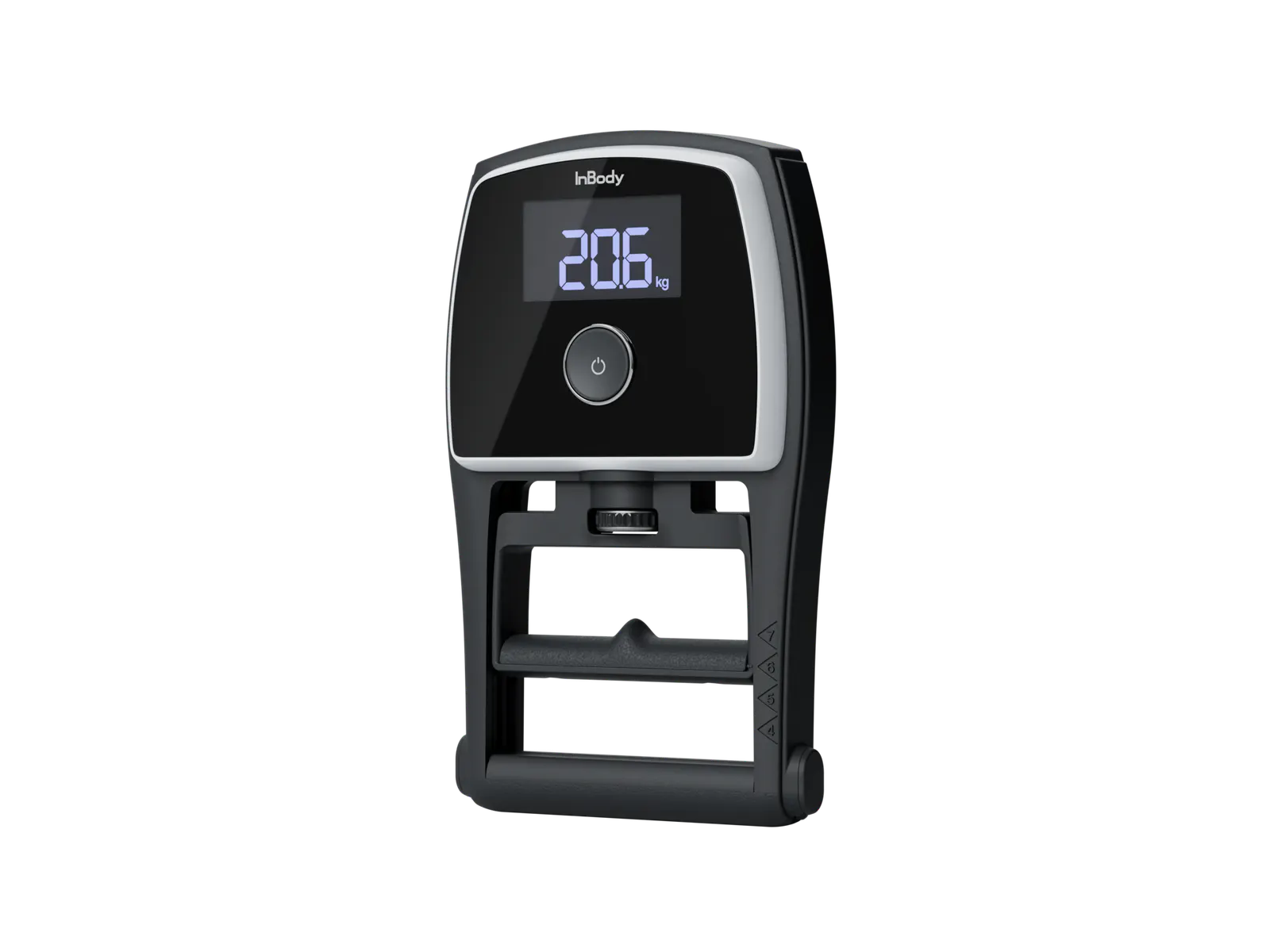
Front view of the InGrip device with display and handle.
The device uses a load-cell sensor and an adjustable handle. Standard posture, the same handle setting and gradual force build-up are just as important for a comparable trend.
The guided handle helps different users hold the device more consistently, which matters because hand position can change the reading.
InBody BWA describes an adjustable roller for different hand sizes, supporting a wider testing population.
The device uses Bluetooth 5.0 and is intended to connect with InBody 970/970S and selected professional InBody systems.
Specifications
These specifications summarize the main InBody InGrip parameters for practical grip strength testing.
Use cases
Grip strength is not only for older adults. It is useful wherever muscle function matters as much as muscle quantity.
For older clients, grip strength adds a functional view to body composition results.
For athletes and fitness clients it helps track strength, fatigue and left-right symmetry.
During weight loss, preserving muscle and strength matters. InGrip can show whether function is dropping.
After illness, injury or a long pause, repeated testing can help show whether strength is returning.
InBody diagnostics
Each device answers a different layer of the picture. The most useful view comes from reading them as complementary measurements, not substitutes.
Body composition, muscle, fat, water, segmental detail and trend tracking over time.
Grip strength and a practical strength layer next to muscle mass.
Articles
More practical guides on grip strength measurement, training progress and how InGrip fits next to InBody.
FAQ
Yes, especially if you want more than muscle-mass numbers. It most often works as an add-on to InBody 970 on a first visit or during repeat tracking.
No. It is not a full-body strength test, but it is a practical muscle-strength marker that works best alongside other data.
Not by itself. Sarcopenia assessment includes muscle strength, muscle mass or quality and physical performance. InGrip provides the grip-strength part.
Side-to-side difference may reflect dominance, training habits, fatigue, pain or injury history.
It depends on sex, age and methodology, so there is no single universal number. The value alone is not a diagnosis. If the result concerns you, discuss it with a doctor or specialist who knows your health context.
Repeat under similar conditions and with enough time for real change. For training this can be after several weeks, for long-term tracking after months.
Yes. Hard training, pain, injury, recent procedures, neurological issues and test motivation can affect the reading.
For most people it is brief and non-invasive. If you have acute pain, injury or a medical restriction against maximum squeezing, consult a professional first.
No booking needed
Start before your first visit so the strength layer can fit into the same measurement flow from day one. The value is strongest when it becomes a tracked trend.