Does coffee really matter before a blood pressure test?
Yes, especially if you want a reading that can be compared with another day. Caffeine is one of the common reasons a result is shifted.
With blood pressure, the biggest difference is not the machine alone but the conditions of the measurement. A rushed check gives you a number. A properly done check gives you a value you can actually compare over time. That is the difference between a random snapshot and a useful trend.
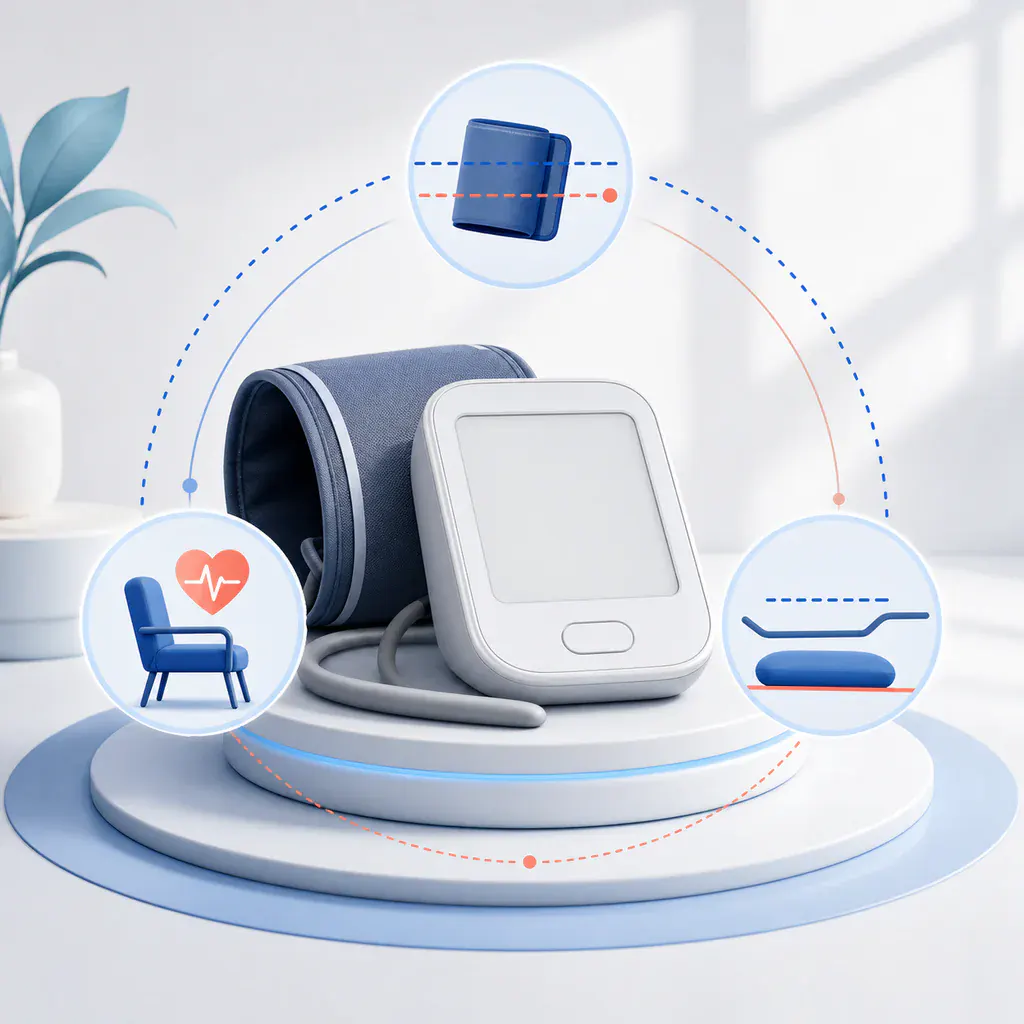
Blood pressure is not a fixed number. It reacts to movement, stress, pain, talking, caffeine, nicotine and how long you have been sitting quietly before the reading.
That is why standard guidance starts with basics: sit quietly before the test, avoid caffeine, smoking and exercise right beforehand, keep your back supported, feet on the floor and arm supported at heart level. This is not overkill. It is what makes the reading more representative of resting blood pressure.
A practical rule is to avoid exercise, smoking and caffeine for about 30 minutes before the test. It also helps not to arrive and measure immediately after stairs, rushing or stress. If you can, empty your bladder and sit quietly for a few minutes first.
If you want repeated readings to mean something, try to measure at a similar time of day and under similar conditions. Comparing a calm morning reading with a late stressed afternoon is much less useful than comparing like with like.
During the test, the goal is a quiet and steady body position: back supported, feet flat on the floor, legs uncrossed, arm relaxed at heart level and no talking. With home devices, cuff placement on a bare arm and an appropriate cuff size also matter.
Even small changes can shift the result. Talking, moving, tensing the shoulders or watching the display nervously often pushes the reading away from a true resting state.
The most common problem is simple: arriving hurried, stressed, after stairs, after coffee or without a short rest. Another frequent issue is tension or conversation during the reading.
Pain, poor sleep, alcohol from the previous evening, a full bladder, some medications and measuring at a very different time of day can all change interpretation. Irregular rhythm can also make blood pressure reading less straightforward and may need proper medical follow-up.
When a value comes out much higher or lower than expected, the first response is usually not panic but a short rest and a repeat measurement. In home monitoring, a second reading after about a minute is common practice.
Trend matters more than one printout. If higher values keep returning under calm and comparable conditions, discuss the pattern with a clinician; ESC 2024 calls office pressure of 120–139/70–89 mmHg elevated and 140/90 mmHg or higher hypertension.
The most useful approach is simple: keep the method, timing and preparation as consistent as possible. Blood pressure naturally changes across the day, so only comparable conditions show whether a real trend is present.
In practice, the BPBIO750 or a home monitor becomes most valuable when the reading is not treated in isolation. Pulse, symptoms, daily routine and repeat measurements all matter.
About the measurement
The main page about blood pressure, pulse and supporting values.
Values explained
More reading
FAQ
Yes, especially if you want a reading that can be compared with another day. Caffeine is one of the common reasons a result is shifted.
Yes. Talking and movement can shift the reading. Quiet stillness is a simple but important part of accuracy.
Yes, if the goal is a meaningful trend. Blood pressure naturally varies through the day, so similar timing makes repeat readings easier to compare.
No. One result can be distorted by conditions. Repeated readings under calm, comparable conditions are much more informative.
The BPBIO750 adds a quick resting blood-pressure layer to the visit. It is most useful when you keep the method consistent across repeat measurements.