Can I compare morning and evening blood pressure?
Only carefully. It is better to compare readings from similar times and similar conditions.
Blood pressure naturally changes during the day. Activity, posture, stress, food, sleep, caffeine and time of day can all move the numbers. The goal is not to make every reading identical, but to understand whether there is a repeated pattern.
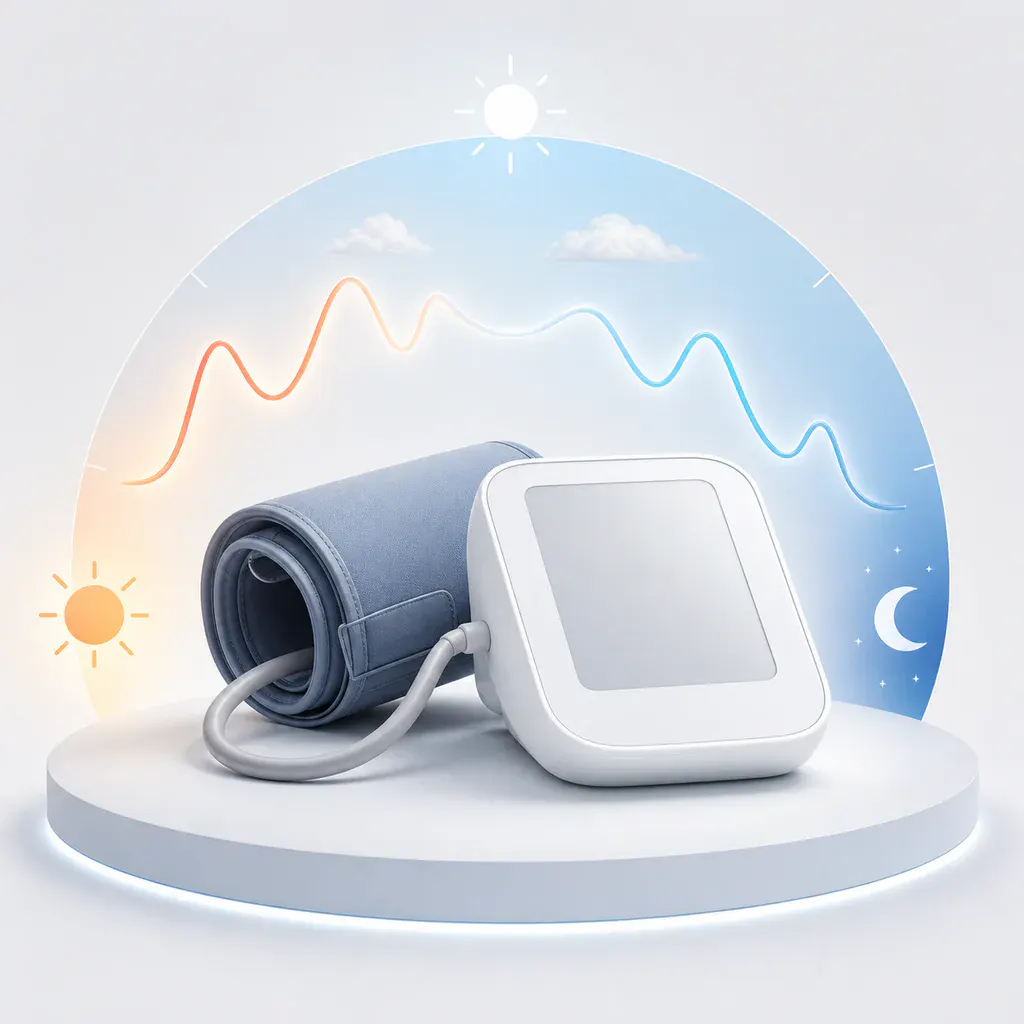
The body does not run in a static mode. Moving from rest to activity, rushing, stress or even a change in posture can shift pressure.
That is why comparing a calm morning reading with a rushed afternoon reading can be misleading.
For trend, compare readings from similar parts of the day and similar conditions.
Caffeine, exercise, stress, pain, poor sleep, full bladder, talking during measurement, recent food and temperature can all influence the result.
Some variability is normal. The important question is whether pressure repeatedly returns to high values or remains high even at rest.
Good measurement technique reduces noise and makes trend clearer.
If blood pressure repeatedly returns to high values, fluctuates strongly even at rest or appears with symptoms such as chest pain, shortness of breath, neurological symptoms or marked dizziness, it should be discussed medically.
Very high readings with serious symptoms need urgent care. Do not treat them as ordinary day-to-day variation.
About the measurement
The main page about blood pressure, pulse and supporting values.
More reading
FAQ
Only carefully. It is better to compare readings from similar times and similar conditions.
No. Some movement is normal. Repeated high values or large swings at rest deserve more attention.
When high values repeat, fluctuate strongly even at rest or come with symptoms such as chest pain, shortness of breath, neurological issues or marked dizziness.
BPBIO750 gives a quick resting value that is useful for comparison over time, especially when later visits are measured similarly to the first.