

Can normal minerals justify cancelling a recommended DXA?
No. Do not cancel a recommended examination based on InBody; ask the referring clinician why it was requested if the reason is unclear.
Minerals on an InBody report are a body-composition estimate. Bone assessment uses other information: densitometry, fracture history and clinical risk. Learn how to keep these results separate and prepare useful questions for your clinician.
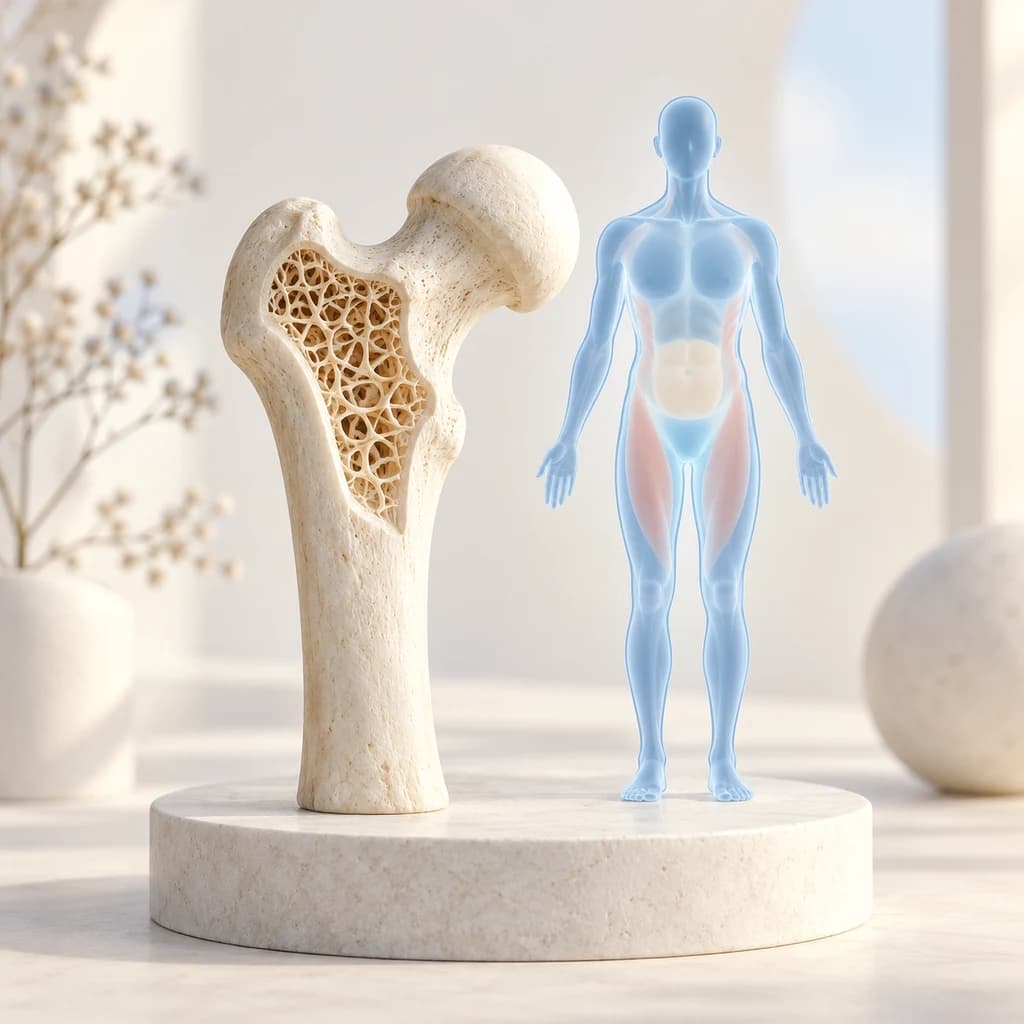
No. Bioimpedance “minerals” do not measure bone density, and a normal result cannot rule out osteoporosis. A low estimate alone cannot establish it either. If bones are your concern, ask a clinician “do I need fracture-risk assessment or DXA?” rather than “how do I raise minerals on my next InBody test?”.
The manufacturer describes minerals as an estimated body-composition component including bone and non-bone minerals. This is not direct imaging of bone. Even an estimate of bone mineral is not the areal density of a specific skeletal site.
| Output | What it describes | What it cannot establish |
|---|---|---|
| InBody minerals | A model-based estimate within body composition | Osteoporosis diagnosis or a calcium dose |
| BMC — bone mineral content | An amount of bone mineral, usually in grams; method and region matter | A direct substitute for BMD |
| BMD from bone DXA | Areal bone mineral density, usually in g/cm² | An individual fracture prediction on its own |
Central bone DXA uses a low dose of X-rays and usually assesses the lumbar spine and hip. Whole-body DXA for fat and lean mass answers a different question: check the purpose and regions before booking.
T-scores and Z-scores use different reference populations. Their use also depends on age and menopausal status, so do not apply a table intended for another group. Clinical interpretation also includes history and fracture risk.
Current Czech NZIP guidance describes preventive history and FRAX assessment for women from one year after menopause up to age 59 and men aged 65–69. Women from age 60 and men from age 70 are referred directly for densitometry. Discuss the actual pathway and referral with your GP or gynaecologist.
These are Czech preventive-programme rules, rather than reasons to wait until that age when a medical concern exists. Discuss a fracture after minor trauma, substantial height loss, long-term corticosteroid treatment or other risk factors earlier. An InBody result does not determine that decision.
Request the clinic’s own preparation instructions when booking, including instructions about calcium supplements. Tell them about possible pregnancy and recent contrast or radioisotope examinations. Do not stop prescribed medication yourself.
Bring your referral, earlier DXA reports, medication list and information about fractures or spine and hip surgery. An InBody report can add body-composition context; it cannot replace an earlier densitometry report.
Think of two folders in one health record. The first contains comparable InBody trends, grip strength and daily function. The second contains the clinical bone report and your clinician’s plan. Progress in the first folder does not automatically demonstrate progress in the second.
For repeat DXA, bring the earlier report and ask whether the results are comparable. The clinic determines follow-up timing and the meaning of a small change using the clinical situation and measurement precision. Monthly InBody testing is not monthly monitoring of osteoporosis treatment.
Do not start high-dose calcium, vitamin D or creatine, or change prescribed treatment, from one result item. The result does not tell you your blood calcium or vitamin D level. If a number concerns you, bring the complete report and explain what prompted the question.
Ask specific questions: should diet and risk factors be reviewed, do I need another test, and what happens next? Exercise and nutrition advice should fit your health; with known osteoporosis or a previous fracture, safe loading matters too.
About the measurement
The main page about body composition measurement, result output and the visit.
More reading
FAQ
No. Do not cancel a recommended examination based on InBody; ask the referring clinician why it was requested if the reason is unclear.
No. BMC describes mineral content, while BMD describes its density in the measured region. The method matters too: a bioimpedance estimate is not a bone-DXA result.
One item cannot determine whether you need a supplement or its dose. Discuss the full report, diet and medical circumstances with a qualified professional.
There is no practical conversion between these outputs. Follow each result within its own method and clinical context.
InBody can help follow fat, muscle and water trends. If your question concerns osteoporosis or fracture risk, take it to a clinician and choose the next step according to clinical need.