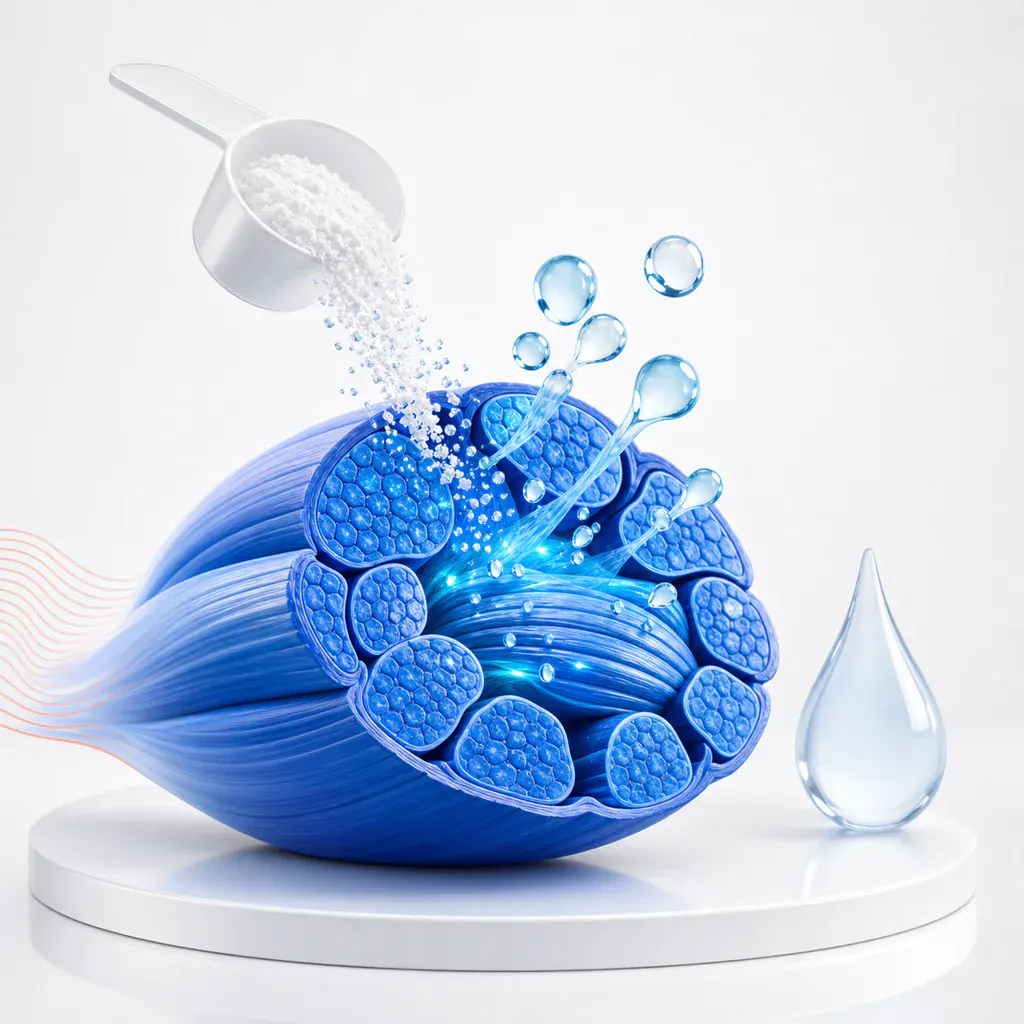
Creatine monohydrate is among the most extensively studied supplements in sports nutrition. According to the International Society of Sports Nutrition (ISSN) position stand, healthy adults taking commonly used doses (3 to 5 g per day), and even higher doses in clinical trials, haven't shown harmful effects on kidney function, liver function, or hormonal markers. That's a summary of the available literature, though, not a personal medical recommendation.
Evidence specifically on women is smaller in scope than for men, but the data available so far doesn't point to higher risk than in men, nor to any systematic disruption of the menstrual cycle. Any interaction with hormonal contraception, meanwhile, is barely studied, so caution and a conversation with your doctor make more sense there than firm conclusions. That doesn't mean a blanket recommendation for everyone, though — for pregnancy, breastfeeding, kidney or liver conditions, or when taking medication, creatine's safety in humans isn't established well enough for a general recommendation, and that decision should always follow a conversation with a doctor.
As for dosing itself, sports nutrition literature commonly cites 3 to 5 g per day as a maintenance dose, with an optional loading phase of around 20 g per day for 5 to 7 days. These are reference figures, not a prescription — if you have any doubts, health complications, or notice unusually fast weight gain or swelling, it's worth discussing supplementation with a doctor rather than relying on fitness sources alone.