Can Max Pulse replace a blood pressure reading?
No. Max Pulse does not return systolic and diastolic pressure the way a validated cuff-based blood pressure monitor does.
MaxPulse and an upper-arm blood pressure monitor both sit in the cardiovascular space, but they do not answer the same question. The monitor measures pressure and pulse. MaxPulse adds fingertip PPG/APG and pulse rate variability (PRV), labelled HRV in its software. They are complementary, not interchangeable.
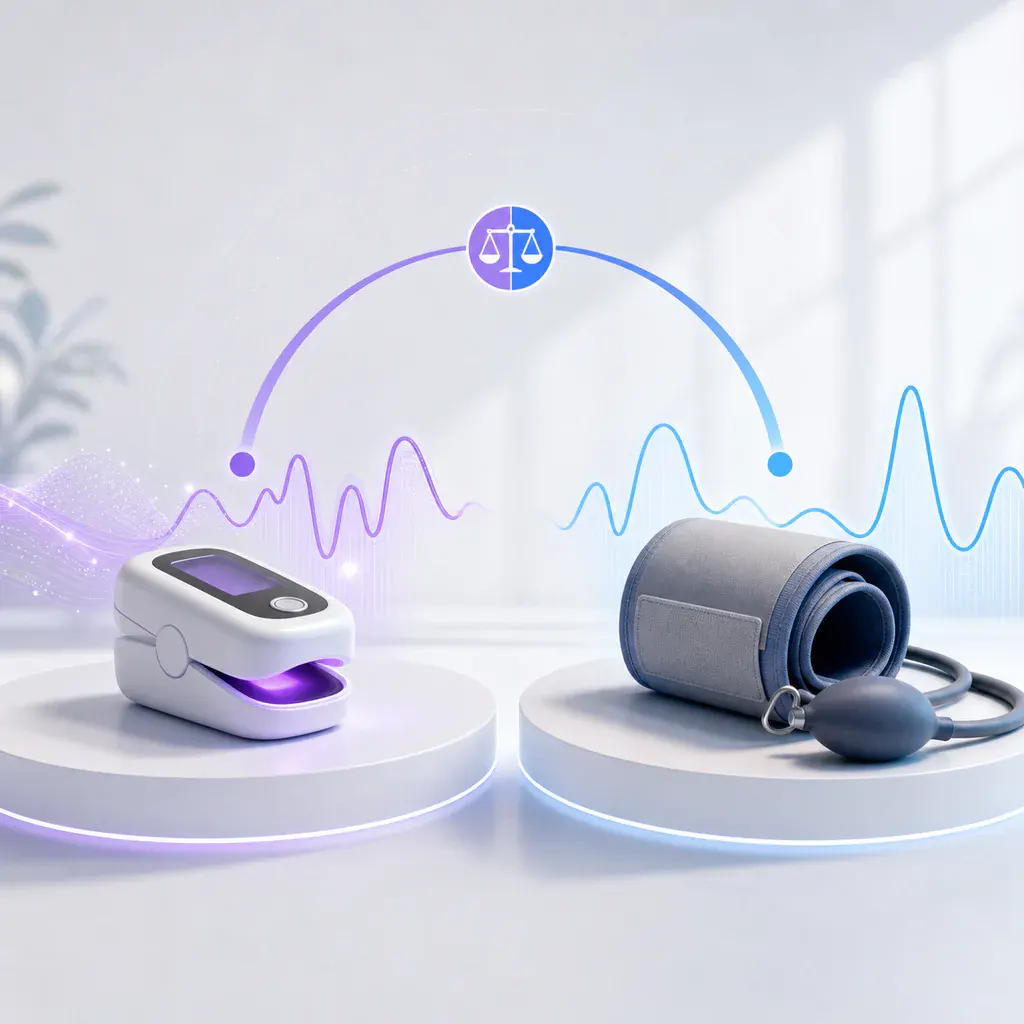
The BPBIO750 is built for a quick resting cuff-based measurement of blood pressure and pulse. It gives systolic, diastolic, pulse and supporting values such as MAP, PP and RPP. If the main question is blood pressure itself, this is the more direct and appropriate tool.
In practice it answers: what did the blood pressure picture look like at that moment, and does the result still make sense when technique and repeat readings are taken seriously?
Max Pulse is not primarily about pressure in mmHg. It uses an optical finger-based pulse-wave signal and focuses on HRV, stress regulation, autonomic balance and vascular signal patterns.
Its strength is a different question: what kind of regulatory and vascular state is the body in right now, and how is that changing over time? That is useful, but it is not a substitute for standard blood pressure measurement.
Both devices touch the cardiovascular and regulatory picture, so both can be influenced by stress, sleep, caffeine, alcohol, illness or a rushed day. But the overlap is still limited.
A blood pressure monitor does not give you HRV or autonomic balance. Max Pulse does not give you systolic and diastolic pressure that can stand in for a proper blood pressure reading. That is why a calm Max Pulse result does not automatically mean blood pressure is fine, and a normal blood pressure result does not automatically mean recovery and stress regulation are fine.
It is possible to have a normal-looking blood pressure reading while Max Pulse still suggests a weaker regulatory picture, for example after poor sleep, sustained mental strain or illness recovery. It is also possible to get a temporarily higher blood pressure reading after stress, caffeine or poor technique without a dramatic Max Pulse shift.
That does not automatically mean one device is wrong. More often it means each device captured a different part of the picture. Context, repeat testing and symptoms matter more than forcing both outputs to say the same thing.
If the main concern is blood pressure, suspected hypertension or repeat blood pressure follow-up, a validated upper-arm monitor remains the right tool. If the focus is stress load, recovery, autonomic balance and regulatory trend, Max Pulse adds more value.
When the goal is a broader picture, the two complement each other well. Blood pressure covers one layer, Max Pulse another. Read next to InBody and repeated over time, the combined picture becomes much more useful than either device alone.
At blood pressure of at least 180/110 mmHg, ESC 2024 recommends assessment for a hypertensive emergency. If it comes with chest pain, shortness of breath, neurological symptoms, confusion, sudden visual change or another serious symptom, seek acute care rather than comparing devices.
Max Pulse also does not replace cardiology review, ECG or arrhythmia assessment. It is a useful additional orientation tool, not a way to delay care when warning symptoms are present.
About the measurement
The main page about HRV, vascular signal, stress and autonomic balance.
FAQ
No. Max Pulse does not return systolic and diastolic pressure the way a validated cuff-based blood pressure monitor does.
Yes. Blood pressure and HRV do not measure the same thing. A calm blood pressure reading can still sit next to a weaker regulatory picture.
Often yes, if you want a broader picture. The blood pressure monitor covers pressure and pulse, while Max Pulse adds HRV, autonomic and vascular context.
Whenever the main issue is blood pressure itself, suspected hypertension or repeat blood pressure follow-up. For blood pressure, a validated upper-arm monitor remains the correct tool.
BPBIO750 and Max Pulse work best as complementary measurements next to InBody. One does not replace the other, but together they give a much richer picture.