Is BIA accurate?
It is useful mainly for tracking trend under a good protocol. It is not a direct weighing of fat and muscle. The result depends on the device, algorithm, hydration, food, movement and test conditions.
Bioimpedance, often shortened to BIA, is a fast way to estimate body composition from how a weak electrical signal travels through the body. InBody can turn that into useful information about muscle, fat, water, segments and other values. It is still a model-based measurement with limits, not a diagnosis and not absolute truth from one result.

A BIA device does not directly weigh fat, muscle and water separately. It measures electrical impedance: how body tissues resist and react to a very weak current. Because water with electrolytes conducts differently than fat tissue, the measured signal can be used to estimate body water and from that other parts of body composition.
The key point with InBody is that it is not the same type of output as a simple home scale. Professional devices use hand and foot electrodes, segmental measurement and multiple frequencies. The output is more detailed, but it remains an estimate based on impedance, body weight, height and other context.
That makes BIA very useful for practical tracking. It is strongest when you compare repeated measurements under similar conditions instead of treating one sheet as a final verdict.
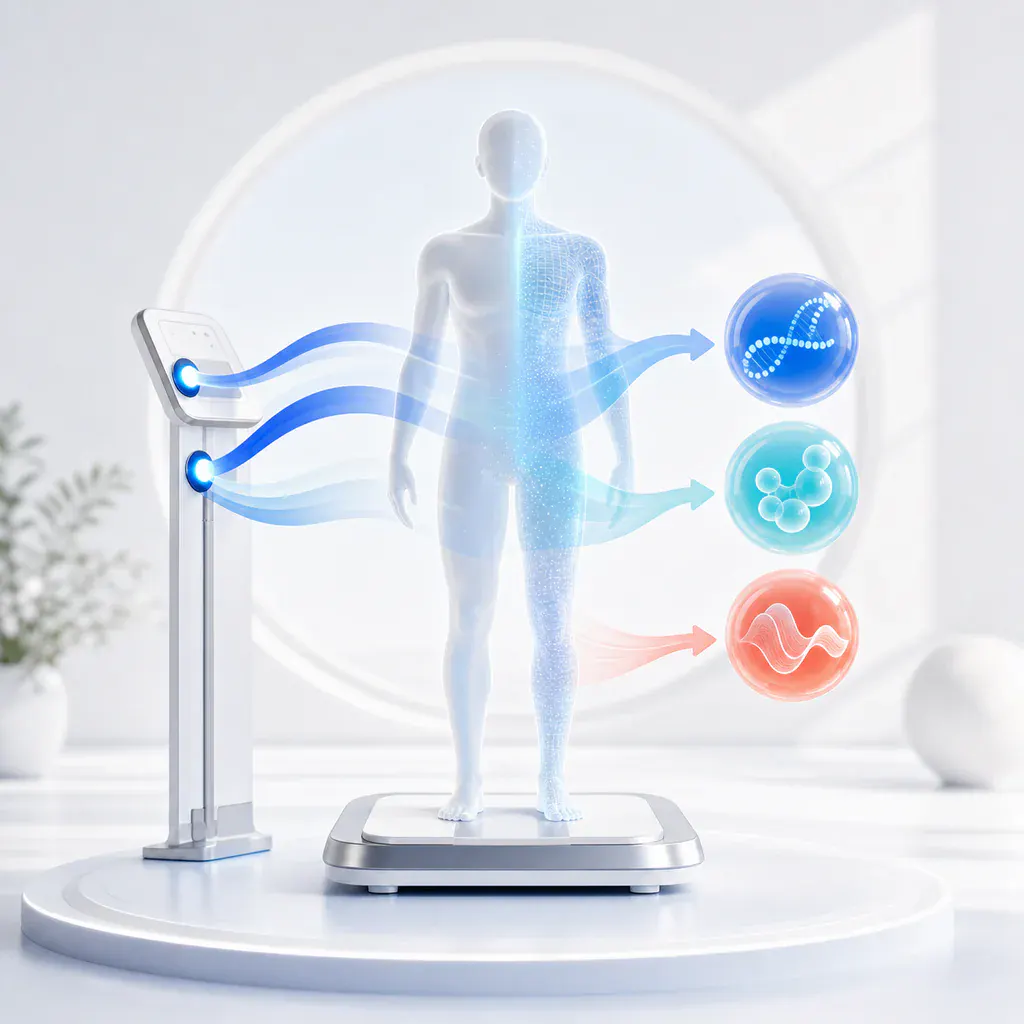
InBody is useful when you want to separate scale weight into more meaningful parts: muscle, fat, body water, segmental distribution and longer-term trend. It can help answer whether weight change is likely coming from fat, muscle, water or a combination.
It is especially practical for people changing training, nutrition or lifestyle. One test creates a baseline; repeated comparable tests show direction. That is where the measurement becomes much more valuable than a single number.
Segmental and water outputs can also explain why a result looks surprising. Sometimes the story is not fat gain or muscle loss, but different hydration, training load, travel, illness or preparation.
InBody does not diagnose disease, explain the exact cause of water retention, prescribe nutrition or tell you which treatment is right for you. It can show patterns worth discussing, but medical interpretation needs a qualified professional when health concerns are involved.
It also does not measure muscle quality, movement technique, strength, fitness or recovery. It can estimate fat-free mass in segments, but it does not show whether someone can use that tissue well in real movement.
Exact decimals should be read carefully. BIA is best used for reasonable trend and meaningful changes, not for assuming every tiny difference is a real tissue change.
BIA is sensitive to water. Training, a large meal, alcohol, sauna, different hydration, a different time of day, skin temperature and electrode contact can all shift the result.
That does not mean every imperfect preparation ruins the measurement. It means a strange result should first be read through the question: were conditions similar to last time?
If conditions were very different, treat the result as a snapshot of that day and repeat the next visit more comparably before making big decisions.
InBody is strongest when you want to monitor change over time: fat loss, muscle gain, return to routine after a pause, sport preparation or checking whether scale weight is moving in the right way.
A useful interval is usually several weeks rather than every day. Daily water and routine fluctuations are too noisy for body composition decisions. Keep time of day, pre-test routine and device type similar.
It makes less sense if you want a diagnosis, want to compare small differences after a few days or plan to decide everything from one isolated number.
About the measurement
The main page about body composition measurement, result output and the visit.
More reading
FAQ
It is useful mainly for tracking trend under a good protocol. It is not a direct weighing of fat and muscle. The result depends on the device, algorithm, hydration, food, movement and test conditions.
Usually not by itself. Such a small difference can easily be measurement noise or different conditions. Repeated direction across comparable visits matters more.
It can estimate muscle and fat-free mass and compare them with other values. It does not assess functional strength, movement quality or a health diagnosis by itself.
The device, measurement path, electrodes, frequencies and algorithm are different. A home scale can be useful for routine, but its estimates are not directly interchangeable with professional InBody results.
Bioimpedance is most valuable when you know what to expect, keep conditions comparable and read results as practical context for your next steps.