Is a higher phase angle always better?
Not automatically. It can be favorable in some contexts, but it must be read with age, body composition, water, device context and trend.
Phase angle on InBody is calculated directly from the ratio between bioelectrical reactance and resistance. Research links it with body cell mass, fluid distribution and clinical status in some populations, but it does not directly measure “cell health,” immunity or recovery. It is most useful as supplementary context on the same device, not as a diagnosis or universal health score.
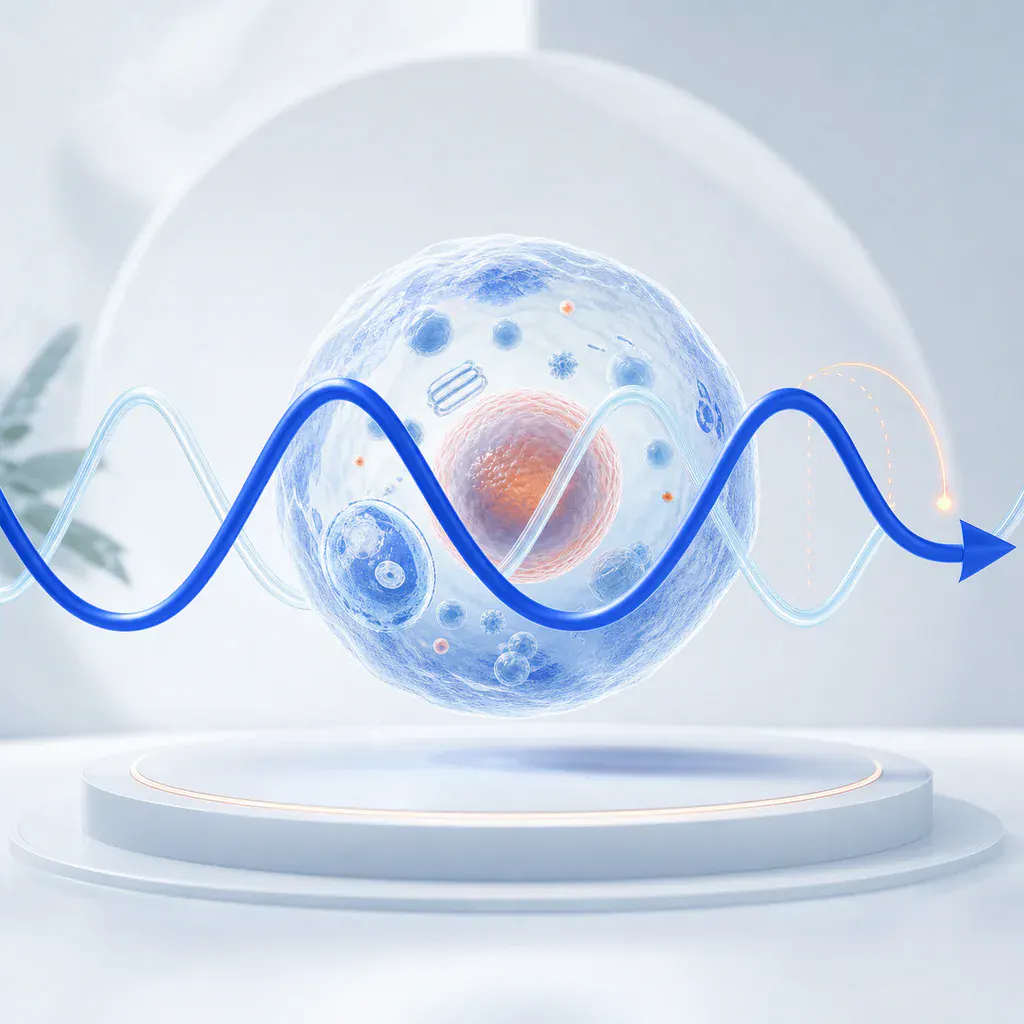
In bioimpedance, the body does not only resist the electrical signal; tissues also react to it. Phase angle summarizes part of this relationship between resistance and reactance.
In practical terms, it is an additional context value related to fat-free mass, body water and cellular structures. Descriptions such as “membrane integrity” are physiological interpretations of associations, not a direct microscopic measurement.
It becomes more useful when read next to muscle mass, water, segments and repeated trend.
Phase angle can be affected by hydration, food, training, alcohol, temperature, illness, body position and pre-test routine. A small shift between two visits should not be overread.
A single value also depends on age, sex, body size, muscle mass and the specific device context. Comparing yourself casually with another person can be misleading.
Repeated measurements under similar conditions are much more useful than one isolated number.
It can add context when you are already looking at muscle mass, water and segmental values. If several values point in the same direction, the interpretation becomes stronger.
It can also help explain why a result deserves a deeper look, for example when muscle, water and phase angle all move unexpectedly.
Even then, it is still context for better questions, not a diagnosis or a treatment decision.
About the measurement
The main page about body composition measurement, result output and the visit.
FAQ
Not automatically. It can be favorable in some contexts, but it must be read with age, body composition, water, device context and trend.
No. It can support interpretation, but it does not diagnose disease or replace professional assessment.
Hydration, food, training, alcohol, temperature, illness and preparation can all influence bioimpedance outputs. Small changes should be confirmed by comparable repeat testing.
On InBody, phase angle is most useful as context next to water, muscle, segments and trend, not as one final number.